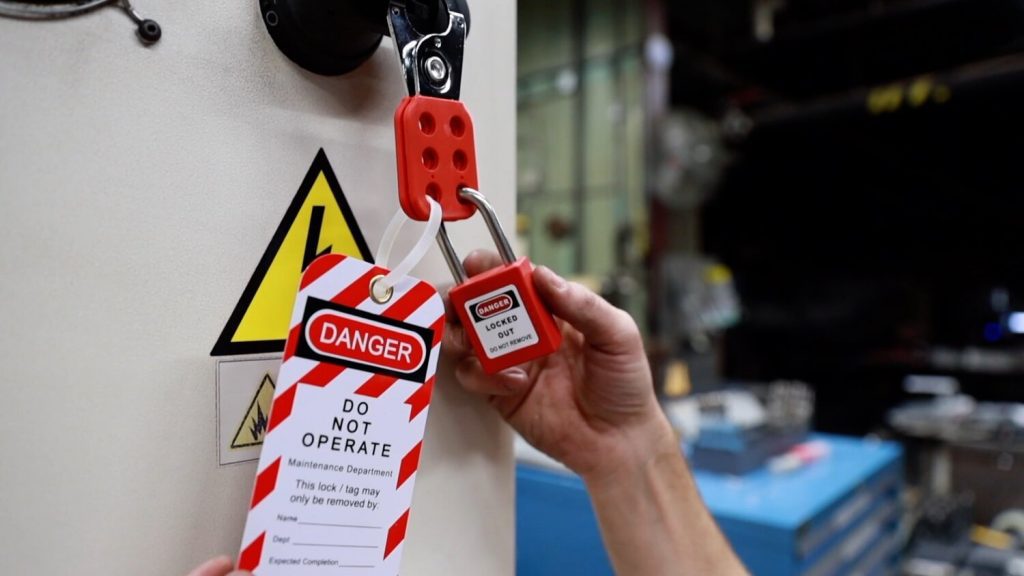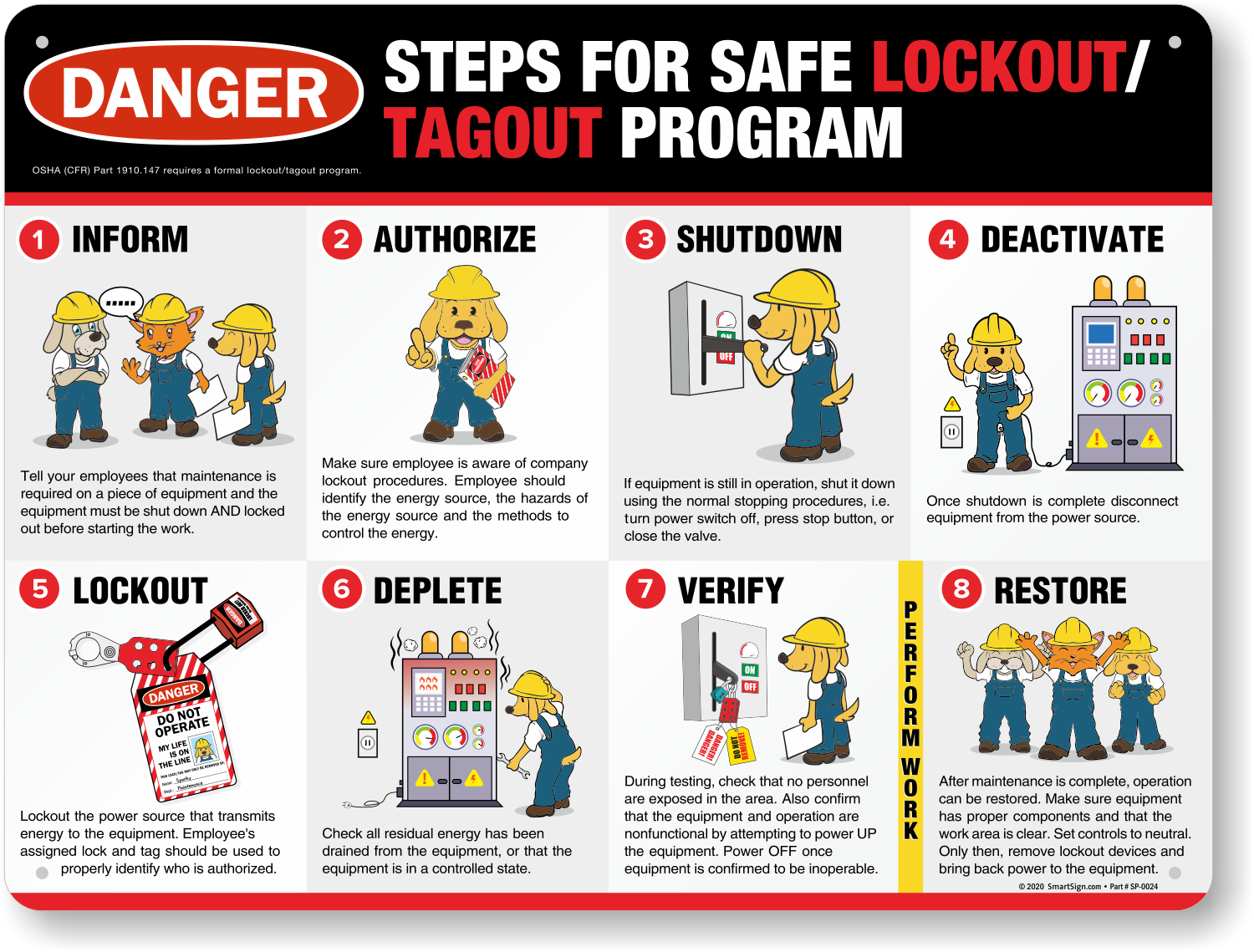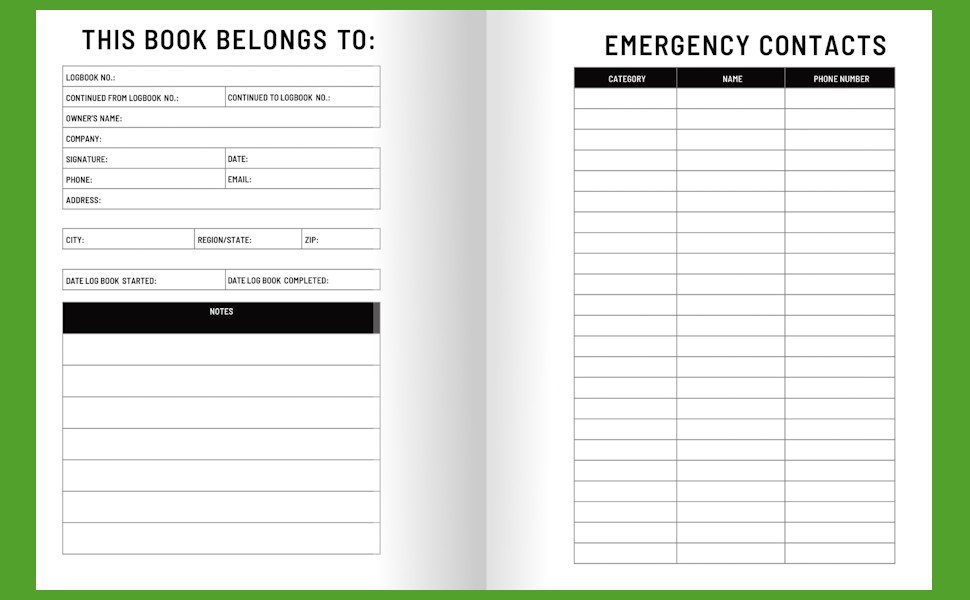
Equipment maintenance should never come at the cost of worker safety. Yet across manufacturing, processing, and industrial facilities, one of the most preventable causes of injury—unexpected machine startup during service—remains a persistent risk. The solution starts not with high-tech sensors or automated systems, but with a simple, often overlooked tool: the lockout tagout log book.
A well-maintained LOTO log book is more than paperwork; it's a legal record, a training tool, and a frontline defense against catastrophic incidents. When used correctly, it verifies that machines are properly de-energized, isolates hazardous energy sources, and tracks accountability across shifts and teams.
Here’s how to make your lockout tagout log book a central pillar of your safety program.
Why a Lockout Tagout Log Book Matters
Every year, OSHA cites hundreds of companies for LOTO violations. Many of these stem from missing or incomplete documentation. A log book turns compliance from an afterthought into a documented, auditable process.
Without a log, you can’t prove that: - All required steps were followed before maintenance - Only authorized personnel performed lockouts - Equipment was verified as de-energized - Tags and locks were removed by the same person who applied them
In an audit or accident investigation, “we probably did it” isn’t enough. You need a timestamped, signed record—and that’s exactly what a log book provides.
Consider a real-world scenario: A technician services a conveyor belt without logging the lockout. Another worker, unaware of the maintenance, re-energizes the system. The result? Severe lacerations and a six-figure OSHA penalty. A filled-out log book could have prevented both.
What Should Be Included in a LOTO Log Book?
A high-functioning log book isn’t just a notebook with names and times. It needs structure. Each entry should capture:
- Date and time of lockout initiation and release
- Equipment ID or name (e.g., “Hydraulic Press #3”)
- Name and employee ID of the authorized worker
- Type of energy sources isolated (electrical, pneumatic, hydraulic, etc.)
- Lock and tag numbers used (for traceability)
- Nature of work performed (e.g., “bearing replacement”)
- Sign-off by supervisor or verifier, if required
- Clear release time and initials
Some companies use pre-printed forms; others adopt digital systems. Either way, consistency is key.
Common mistakes include: - Backdating entries - Using pencil (erasable records aren’t trustworthy) - Skipping sign-offs after shift changes - Failing to record tag removal
One plant discovered that 40% of their LOTO logs were missing release times—creating liability because there was no way to confirm when machines were safely returned to operation.
Paper vs. Digital Log Books: Pros and Cons
While paper logs are still widely used, digital solutions are gaining ground. The right choice depends on your workflow, facility size, and compliance needs.

| Format | Pros | Cons |
|---|---|---|
| Paper Log Books | Low cost, no training required, works offline | Prone to damage, hard to audit, difficult to search |
| Digital LOTO Systems | Real-time updates, auto-reminders, integration with CMMS | Higher initial cost, requires device access and training |
A mid-sized automotive parts manufacturer switched from paper to a tablet-based log system. Within six months, compliance rose from 68% to 96%, and audit prep time dropped by 75%. The investment paid for itself in reduced downtime and fewer near-misses.
However, digital isn’t always better. In remote or high-hazard environments where electronics are restricted, a durable, weather-resistant paper log remains the smart choice.
Top 5 Lockout Tagout Log Book Solutions For teams looking to upgrade their system, here are five reliable options—ranging from analog to app-based:
- Grace Industries LOTO Log Book (Paper)
- - Spiral-bound, 100-entry capacity
- - Includes OSHA-compliant fields and carbon copy pages
- - Ideal for small to mid-sized shops
- - Best for simplicity and portability
- Seton Heavy-Duty LOTO Log Binder
- - Three-ring binder with customizable tabs
- - Tear-resistant, laminated pages
- - Supports multi-machine entries
- - Best for large facilities with varied equipment
- BradyLockoutHub (Digital Platform)
- - Cloud-based log tracking with mobile access
- - QR code scanning for equipment
- - Automated reports and audit trails
- - Best for enterprises needing scalability
- LockOut/TagOut Pro (Mobile App)
- - iOS/Android app with offline mode
- - Photo capture of lock points
- - Exportable PDF logs
- - Best for field technicians and contractors
- Master Lock eLogBook
- - Integrated with Master Lock’s padlock ecosystem
- - Real-time notifications for overdue releases
- - NIST-compliant timestamping
- - Best for facilities using Master Lock hardware
Each has strengths, but the best choice aligns with your team’s habits. Don’t assume digital is superior—choose what gets used consistently.
How to Train Teams on LOTO Log Use
Even the best log book fails if workers don’t understand its purpose. Training should go beyond “fill out the form.” It must emphasize why documentation saves lives.
Key training points: - A log book is a legal document—signing a false entry can have serious consequences - Locks without logged data are as dangerous as no lock at all - Supervisors must spot-check entries monthly - New hires should shadow experienced workers during real LOTO events
One refinery uses a “log book drill”: during safety meetings, they present a blank log and simulate a maintenance scenario. Teams must complete it correctly under time pressure. It’s hands-on, engaging, and reveals gaps fast.
Also, post quick-reference guides near high-use machines. A laminated checklist beside a press or pump reminds workers exactly what to log—no guesswork.
Integrating LOTO Logs
with Broader Safety Systems
A standalone log book has limits. To maximize impact, integrate it with your:
- Preventive maintenance schedules – Ensure LOTO is planned before servicing
- Incident reporting system – Cross-reference logs during investigations
- Shift handover protocols – Log status passed verbally and in writing
- CMMS (Computerized Maintenance Management System) – Sync digital logs with work orders

For example, when a work order is created in a CMMS, it can auto-generate a LOTO log entry requirement. The technician can’t mark the job complete until the log is submitted. This closes the loop between planning and execution.
One food processing plant reduced unauthorized energizations by 89% after linking LOTO logs to their maintenance workflow. The system wouldn’t release a machine for production until the log showed proper clearance.
Common Pitfalls and How to Avoid Them
Even experienced teams make mistakes. Watch for these red flags:
- Ghost logging – Filling out the book after the fact
- Fix: Require real-time entries and random audits
- Blank fields – Missing signatures or equipment IDs
- Fix: Use checklists or digital forms that won’t submit until complete
- One-size-fits-all entries – Same reason for every lockout
- Fix: Require specific work descriptions (e.g., “replacing drive belt,” not “maintenance”)
- No review process – Logs filed and forgotten
- Fix: Assign a safety officer to review logs weekly
One facility prevented a potential fatality when a weekly log review caught a technician who had logged a lockout but never applied a physical lock. The discrepancy triggered immediate retraining.
Actionable Steps to Improve Your LOTO Log System
Don’t wait for an audit or incident to act. Start today:
- Audit your current logs – Pull the last 30 entries. Are they complete, legible, and signed?
- Standardize the format – Use a consistent, OSHA-aligned template
- Train and retrain – Conduct quarterly refreshers with real scenarios
- Introduce spot checks – Supervisors verify 1–2 log entries per shift
- Consider digitization – If paper is failing you, pilot a digital tool
A lockout tagout log book isn’t just compliance paperwork. It’s a living document that reflects your safety culture. When used with discipline, it eliminates ambiguity, protects workers, and stands as undeniable proof that your team follows the rules—every time.
Make it a habit. Make it mandatory. Make it non-negotiable.
Frequently Asked Questions
What is a lockout tagout log book used for? It records when and by whom equipment was locked out for maintenance, ensuring safety and OSHA compliance.
Is a LOTO log book required by OSHA? While OSHA doesn’t explicitly mandate a log book, it requires documentation of the energy control program, making logs a practical necessity for compliance.
Who should fill out the LOTO log? Only authorized employees performing the lockout must complete their own entries.
Can you use digital LOTO logs? Yes, digital logs are acceptable if they’re secure, tamper-proof, and include all required data fields.
How long should LOTO logs be kept? OSHA recommends retaining records for at least one year, though many companies keep them for three to five years.
Should every lockout be logged? Yes, every instance of lockout for servicing or maintenance should be documented.
Can multiple workers use the same log entry? No—each worker must apply their own lock and tag, and each must be listed separately in the log.
FAQ
What should you look for in Lockout Tagout Log Book Best Practices for Safety Compliance? Focus on relevance, practical value, and how well the solution matches real user intent.
Is Lockout Tagout Log Book Best Practices for Safety Compliance suitable for beginners? That depends on the workflow, but a clear step-by-step approach usually makes it easier to start.
How do you compare options around Lockout Tagout Log Book Best Practices for Safety Compliance? Compare features, trust signals, limitations, pricing, and ease of implementation.
What mistakes should you avoid? Avoid generic choices, weak validation, and decisions based only on marketing claims.
What is the next best step? Shortlist the most relevant options, validate them quickly, and refine from real-world results.