Every year, hundreds of workers suffer serious injuries—or worse—during equipment servicing. The root cause? Unexpected startup of machinery. The solution: a properly executed lockout tagout (LOTO) procedure. This isn’t just safety protocol—it’s a legal requirement under OSHA and a cornerstone of responsible industrial operations.
At its core, the LOTO procedure is a systematic process that isolates energy sources from machines or equipment to prevent accidental energization during maintenance. When done right, it protects technicians, ensures compliance, and reduces costly downtime from safety incidents.
But too many organizations treat LOTO as a checkbox exercise. They hang tags without locks, skip energy source verification, or assume all employees understand the process. These gaps turn a life-saving system into a liability.
This guide breaks down the LOTO procedure in practical, enforceable terms—step by step, with real-world context.
The 7-Step Lockout Tagout LOTO Procedure
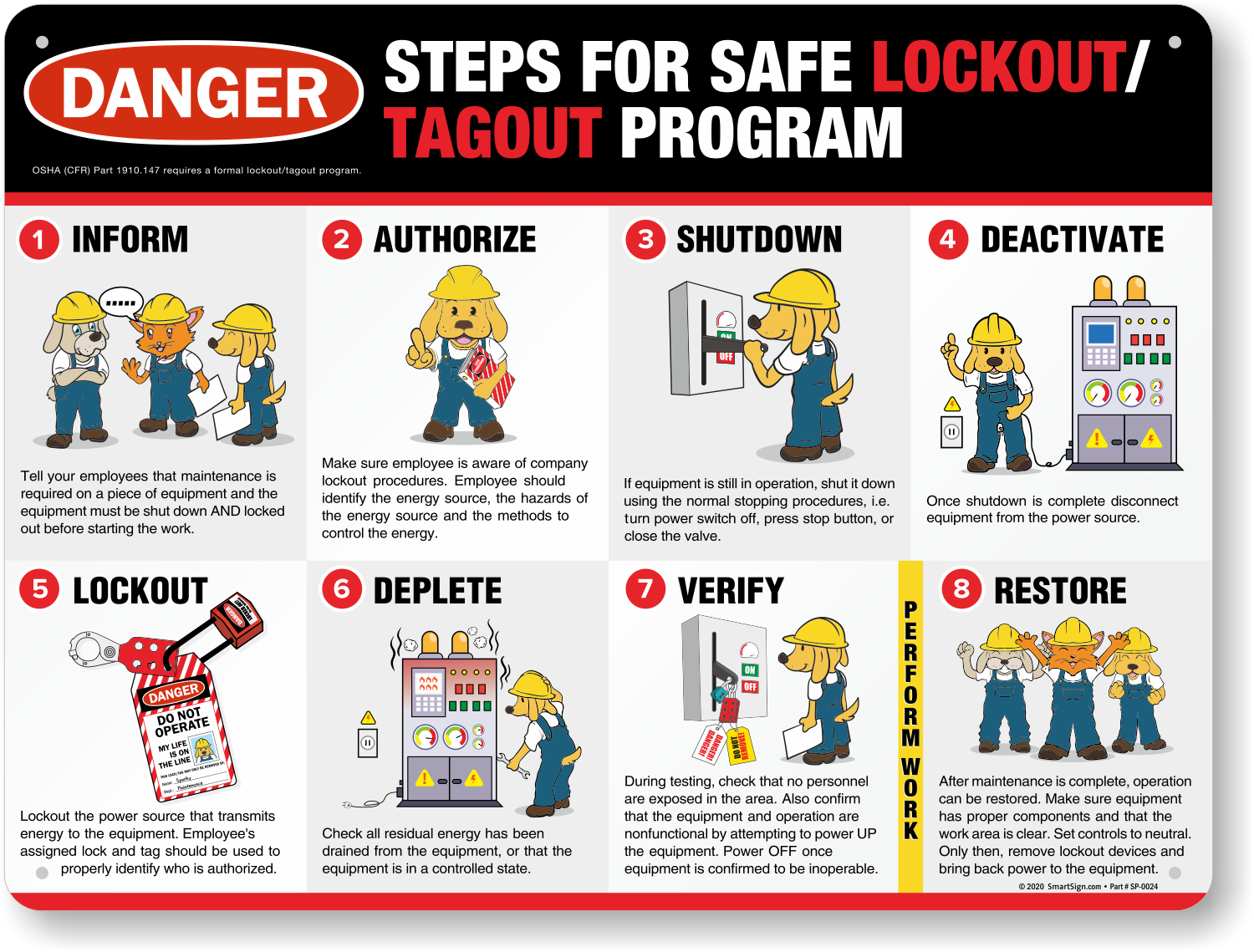
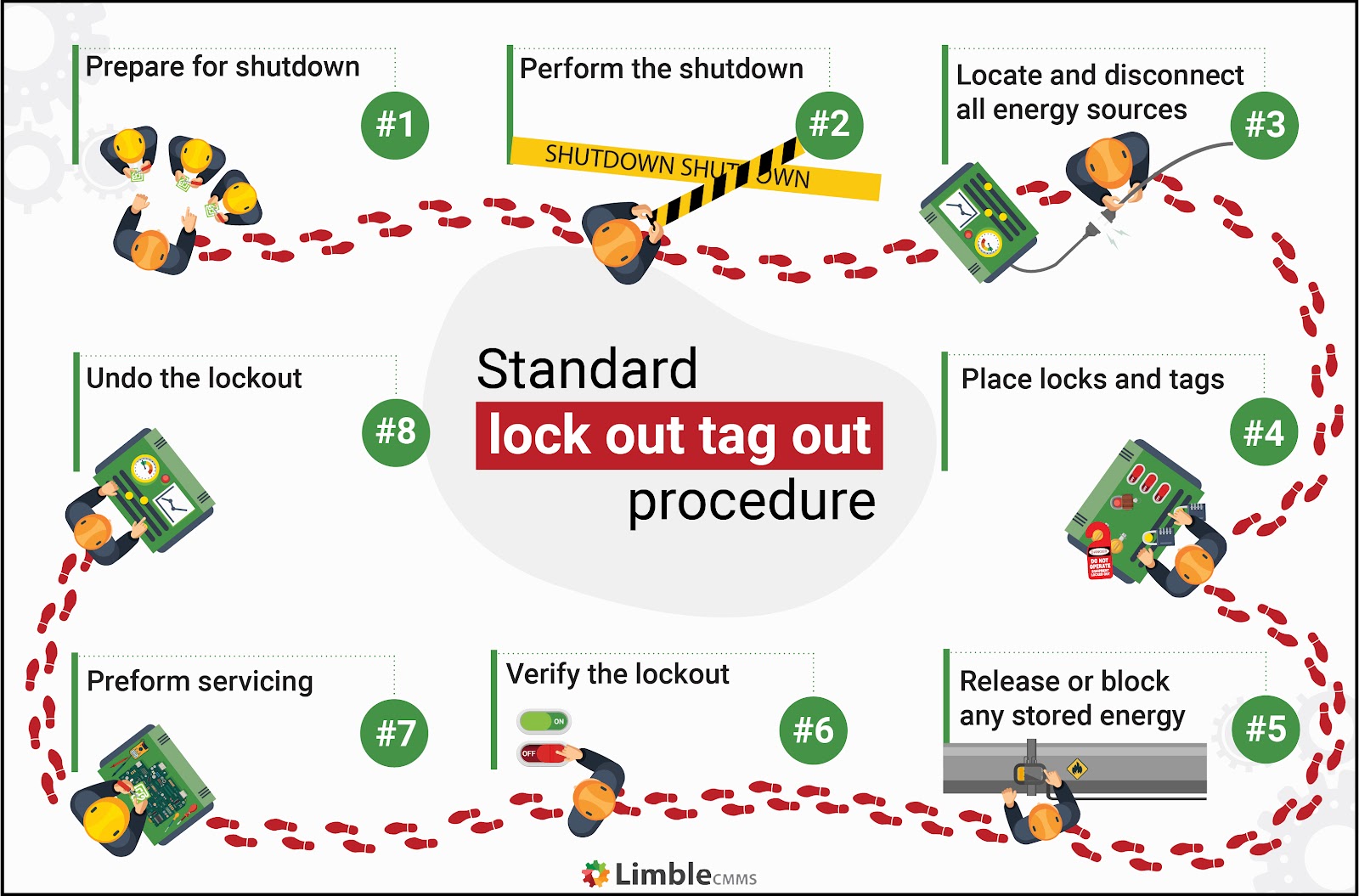
Every effective LOTO program follows a standardized sequence. Deviations create risk. The full procedure consists of seven critical steps, each non-negotiable.
1. Prepare for Shutdown
Before any work begins, authorized employees must identify: - The type and magnitude of energy involved (electrical, hydraulic, pneumatic, chemical, etc.) - The energy-isolating devices (circuit breakers, valves, disconnects) - Required lockout devices and personal protective equipment (PPE)
Example: A maintenance team servicing a conveyor belt must determine whether the system uses electric motors, gravity-fed rollers, or stored tension in belts—each presenting different energy hazards.
2. Notify Affected Personnel Workers who operate or use the equipment must be informed of the upcoming shutdown. This ensures no one attempts to restart machinery unknowingly.
Best practice: Use visual alerts (e.g., signage) and verbal confirmation. Document communication when possible.
3. Shut Down the Equipment Use normal stopping procedures. Never rely on emergency stops as the primary shutdown method—they don’t always cut all energy sources.
4. Isolate Energy Sources Physically disconnect or block all energy sources. This includes: - Locking out circuit breakers - Closing and locking isolation valves - Blocking moving parts - Bleeding pressurized lines
Common Mistake: Failing to isolate secondary energy sources like springs, capacitors, or elevated loads. A forklift mast with raised forks stores gravitational potential energy—this must be mechanically secured.
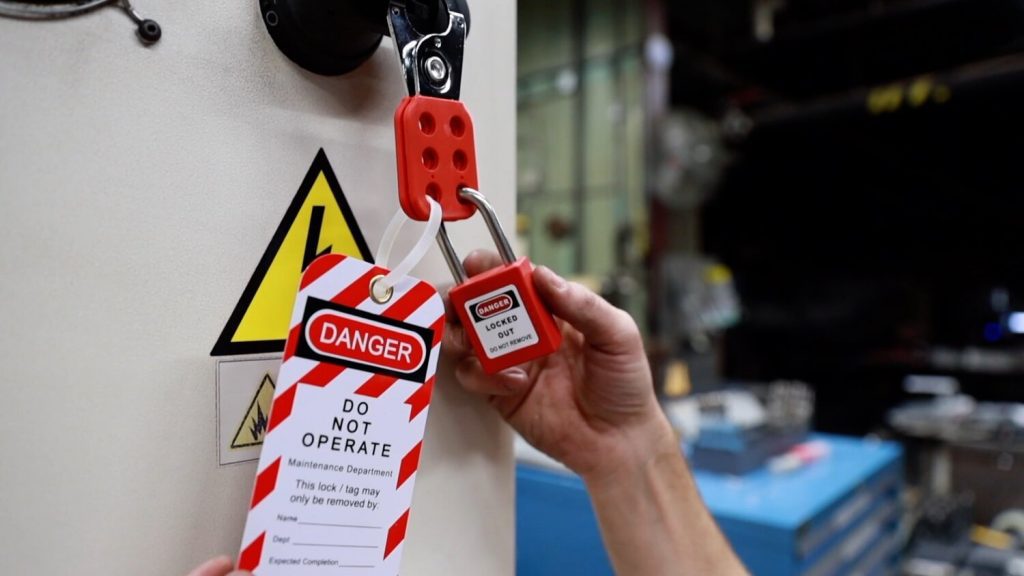
5. Apply Locks and Tags Each authorized employee applies their personal lock and tag. No shared locks. No master keys. Each lock must be uniquely identifiable to the individual.
Tags must include: - Name of the person applying the lock - Date and time - Reason for lockout - Contact information (if applicable)
OSHA requires tags to be durable, legible, and securely attached.
6. Release Stored Energy Even after isolation, energy can remain in systems. This step involves: - Draining hydraulic lines - Depressurizing pneumatic systems - Discharging capacitors - Allowing rotating parts to stop completely
Verification is critical. Use voltage testers, pressure gauges, or mechanical indicators.
7. Verify Isolation (Zero Energy State)
This is the final and most crucial step. The equipment must be tested to confirm it cannot start.
- Attempt to start the machine using normal controls
- Observe that no movement or response occurs
- Re-secure controls after testing
Warning: Never assume isolation is complete without verification. In 2022, a worker in Ohio was fatally injured when a mixer started during cleaning—despite a tag being present. The lock was missing, and stored energy wasn’t fully released.
Who Is Responsible for the LOTO Procedure?
Clear roles prevent confusion and protect workers.
Authorized Employees These are trained personnel who physically implement the LOTO procedure. They must: - Understand energy hazards - Know how to isolate and verify systems - Be able to apply and remove their own locks
Only authorized employees may perform lockout.
Affected Employees These are operators or users of the equipment. They don’t perform maintenance but must: - Recognize when LOTO is in place - Never attempt to remove locks or bypass tags - Report violations immediately
Employer Responsibilities Employers must:
- Develop and document energy control procedures
- Provide appropriate lockout devices (locks, hasps, tags)
- Train employees annually
- Conduct periodic inspections (at least annually)
Inspections should include a review of each machine’s LOTO process and observation of employee performance.
Common LOTO Procedure Failures and How to Avoid Them
Even experienced teams make mistakes. These recurring issues undermine safety:
Using Tags Without Locks Tags are warnings. Locks are physical barriers. OSHA allows tag-only use only if the tag provides “equivalent protection”—a high bar rarely met. Always use locks when possible.
Group Lockout Confusion
When multiple workers service one machine, use a group lockout box. Each worker applies their lock to the box, which holds the master key to the energy-isolating device. No one removes their lock until all work is complete.
Skipping Verification Assuming a machine is de-energized without testing is dangerous. Always verify with test instruments.
Incomplete Energy Source Identification A chemical processing plant once had a valve bypassed during maintenance. Workers locked out the main line but missed a secondary feed—resulting in a chemical release. Map all energy pathways.
Poor Documentation Generic LOTO procedures fail. Each machine needs a specific, written plan that includes: - Equipment name and location - Energy sources - Isolation methods - Lock application points
Real-World LOTO Procedure Examples
Example 1: CNC Machine Maintenance A machinist needs to replace a spindle bearing.
- Notifies supervisor and nearby operators
- Powers down using the control panel
- Locks out the main disconnect and hydraulic valve
- Applies personal lock and tag
- Releases pressure in the coolant system
- Verifies by attempting to start the machine
- Begins work only after confirmation
Upon completion, the machinist removes the lock only after ensuring all tools are clear and guards are reinstalled.
Example 2: Conveyor System Repair A technician repairs a jammed roller.
- Identifies electrical motor and gravity-based tension as energy sources
- Locks out motor disconnect and secures roller with mechanical stop
- Tags all isolation points
- Releases belt tension manually
- Tests by activating start button—no motion occurs
- Proceeds with repair
Team-based work uses a group lockout box at the main disconnect.
Equipment and Tools for Effective LOTO Implementation
The right tools make compliance easier and more reliable. Invest in:

| Tool | Purpose | Best Practice |
|---|---|---|
| Padlocks | Personal lockout | Use keyed-alike or keyed-different based on need |
| Hasps | Multiple locks on one point | Install on disconnects for group lockout |
| Tags | Warning and identification | Use weather-resistant, tamper-proof tags |
| Lockout Stations | Centralized storage | Place near high-risk equipment |
| Valve Lockouts | Block valve operation | Match to valve type (gate, ball, lever) |
| Circuit Breaker Locks | Prevent resetting | Use device-specific models |
Avoid cheap, generic locks. They fail under stress or exposure. Invest in industrial-grade, standardized devices.
OSHA Requirements and Compliance Tips
OSHA’s standard 29 CFR 1910.147 sets the legal baseline for LOTO. Key requirements:
- Written procedures for each piece of equipment
- Annual employee training and certification
- Periodic inspections (at least once per year)
- Documentation of all inspections
Penalties for non-compliance can exceed $15,000 per violation. In 2023, a food processing plant was fined over $120,000 after an employee lost fingers when a mixer restarted during cleaning—no locks were used.
Pro Tip: Conduct unannounced LOTO audits. Watch how employees respond during real shutdowns. Are they rushing? Skipping steps? Use findings to refine training.
Building a Sustainable LOTO Culture
Procedures fail when safety becomes bureaucratic. To build lasting compliance:
- Involve frontline workers in procedure development
- Recognize employees who follow LOTO correctly
- Share near-miss stories internally
- Use visual aids: posters, floor markings, digital reminders
A manufacturing plant in Michigan reduced LOTO violations by 78% in one year simply by adding color-coded lock stations and monthly safety huddles.
Culture matters more than compliance. When workers see LOTO as personal protection—not just rules—they follow it consistently.
Final Thoughts: Make LOTO a Non-Negotiable
The lockout tagout LOTO procedure isn’t complex—but it is critical. Lives depend on each step being followed, every time. Whether you’re servicing a pump, replacing a motor, or clearing a jam, never bypass the process.
Start by auditing your current LOTO practices. Are procedures machine-specific? Are locks personal? Is verification standard practice? Fix gaps now, before an incident forces the issue.
Train rigorously. Inspect regularly. Empower employees. Turn LOTO from a policy into a practice—one that protects everyone who walks onto your floor.
Frequently Asked Questions
What is the first step in a LOTO procedure? The first step is preparing for shutdown by identifying all energy sources and the methods needed to control them.
Can a tag be used instead of a lock? Only in rare cases where a lock can’t be applied and the tag provides equivalent protection. OSHA strongly prefers lockout over tagout.
Who can remove a LOTO lock? Only the authorized employee who applied the lock may remove it, unless a formal retrieval procedure is followed.
What happens if a worker is injured during LOTO? The lock must not be removed until the situation is resolved. Emergency removal requires management authorization and documented justification.
How often should LOTO procedures be reviewed? At least annually, and whenever equipment or processes change.
Do all machines need a written LOTO procedure? Yes, if they have multiple energy sources or require disassembly, servicing, or adjustment.
What’s the difference between affected and authorized employees? Affected employees operate equipment; authorized employees perform maintenance and apply locks.
FAQ
What should you look for in Lockout Tagout LOTO Procedure: A Complete Safety Guide? Focus on relevance, practical value, and how well the solution matches real user intent.
Is Lockout Tagout LOTO Procedure: A Complete Safety Guide suitable for beginners? That depends on the workflow, but a clear step-by-step approach usually makes it easier to start.
How do you compare options around Lockout Tagout LOTO Procedure: A Complete Safety Guide? Compare features, trust signals, limitations, pricing, and ease of implementation.
What mistakes should you avoid? Avoid generic choices, weak validation, and decisions based only on marketing claims.
What is the next best step? Shortlist the most relevant options, validate them quickly, and refine from real-world results.